International Texas Longhorn Association

ITLA History

ITLA Headquarters, Glen Rose, Texas
On January 12th, 1990, a steering committee met in the Dallas/Fort Worth area to discuss organizing a new Texas Longhorn Association. This organizational meeting was the result of much work to locate and meet with people that were dissatisfied with the existing registry.
A steering committee was elected, consisting of Jerry Williams, Bill Anthony, Happy Shahan, Stan Searle, and Pat Holt. This committee was asked to pursue the possibility of forming a new Texas Longhorn Association and present their findings at the next meeting.
Formation & Early Years
The International Texas Longhorn Association was formed on March 9th, 1990 in Austin, Texas. The first headquarters was in Jerry Williams’ office in Austin. The current headquarters is in Glen Rose, Texas on land donated by Larry P. Smith.
From the very beginning, ITLA has been a member-focused and member-driven association. The organization was founded on the principles of integrity, transparency, and dedication to preserving the Texas Longhorn breed.
Growth & Milestones
The first ITLA Convention and Show was held on October 25th, 1990 in Austin, Texas. Since then, ITLA has grown significantly:
- 1990: 413 charter members
- 2026: Over 3,000 members worldwide
- Annual Championship Show
- Youth Show programs
- Queen and Princess contests
- Online Judges Clinic
- International Photo Show Contest
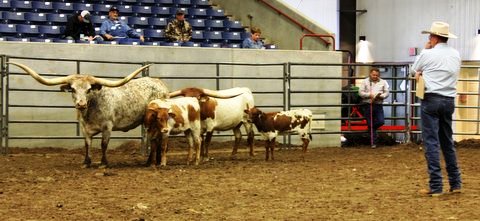
ITLA Championship Show judging
Longhorns Legacy
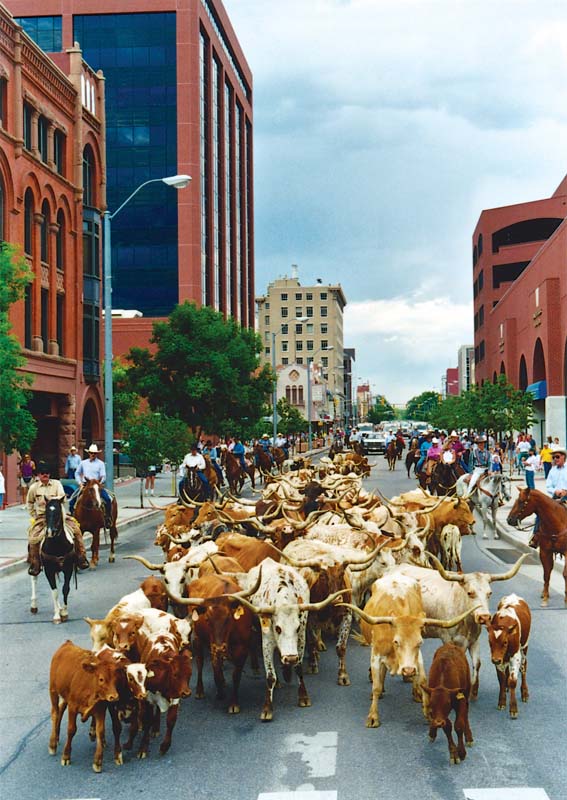
The Texas Longhorn’s origins trace back to the crossing of Bos Indicus and Bos Taurus cattle brought to the Americas by Spanish explorers in 1494. Through centuries of natural selection, these cattle developed the unique characteristics that define the breed today.
The Seven Families
The genetic foundation of today’s registered Texas Longhorns comes from seven distinct bloodlines, known as “The Seven Families”:
- Butler – One of the oldest preserved bloodlines
- Wichita Refuge – From the 1927 government herd
- Peeler – Known for distinctive horn configurations
- Wright – Contributed to horn development
- Phillips – Valued for conformation
- Yates – Southern Texas heritage
- Marks – Unique genetic contributions
Remarkable Breed Characteristics
Key Statistics
- Longevity: Many Texas Longhorns live and produce calves past 20 years of age
- Calving Ease: 99.7% unassisted birth rate – the highest of 11 breeds tested
- Disease Resistance: Immune to tansy ragwort poisoning, resistant to bloat and pinkeye
- Lean Meat: Average 0.36″ fat thickness vs 0.44″ for other breeds
Modern Influence
The Texas Longhorn’s genetic traits have been so valued that they’ve contributed to the development of modern synthetic breeds, including El Monterey, Salorn, and Geltex. These breeds combine the Longhorn’s hardiness with other desirable characteristics.
Today, the Texas Longhorn continues to be prized not only for its beauty and historical significance but also for its practical advantages in modern cattle operations. The breed’s legacy lives on through dedicated breeders and organizations like ITLA who work to preserve and promote these remarkable animals.